

Why Your Bookkeeping Is Costing You More Than You Think
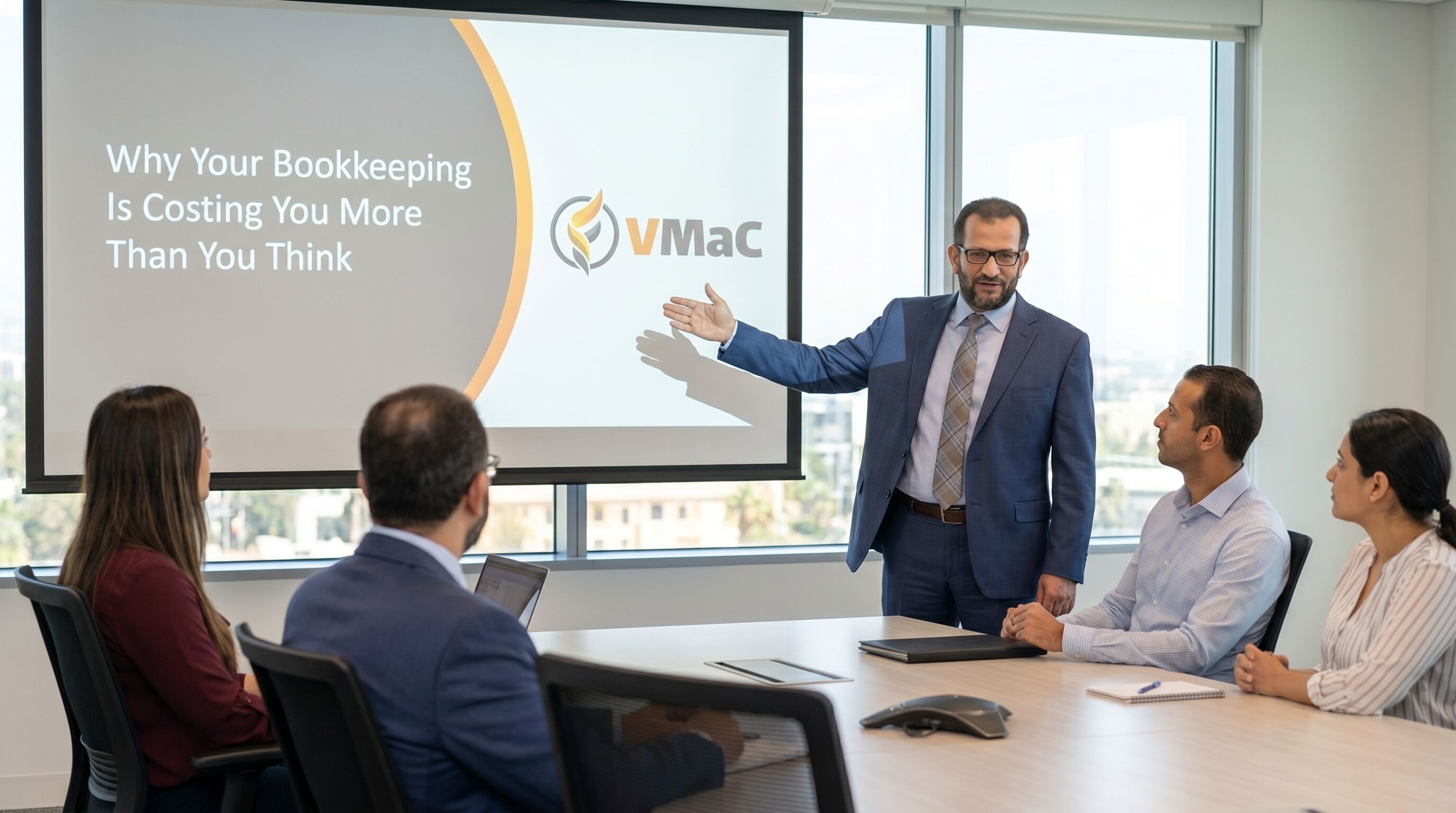
Most business owners think of bookkeeping as a necessary evil.
Posted On
7th June 2026
Something that has to get done — by someone, somehow — so that taxes get filed and the bank statements reconcile. A back-office function. Administrative. Unglamorous. Easy to put off, easy to underpay for, easy to hand to whoever is available.
That thinking is expensive. More expensive than most owners realize until the damage is already done.
Bookkeeping isn’t just record-keeping. Done right, it’s the foundation every financial decision in your business is built on. Done wrong — or done cheaply — it quietly erodes your profitability, your cash flow, and your ability to grow.
Here’s what that actually looks like in practice.
The Real Cost of Inaccurate Books
When your books aren’t current, accurate, and properly categorized, you’re not just dealing with messy spreadsheets. You’re making business decisions based on numbers that don’t reflect reality.
You might think you have $80,000 in the bank and feel comfortable. But if $35,000 of that is already committed to outstanding vendor invoices that haven’t been entered yet, your real position is very different — and the decision you just made based on that number may have been the wrong one.
Inaccurate books lead to:
- Overpaying taxes — when expenses aren’t properly categorized or captured, your taxable income looks higher than it actually is. You pay taxes on money you shouldn’t have.
- Underpaying taxes — and the opposite problem: misclassified revenue or incorrectly recorded transactions can trigger audits and penalties that cost far more than the original error.
- Missed cash flow warnings — most businesses that fail don’t fail because they weren’t profitable. They fail because they ran out of cash. Poor bookkeeping hides the early warning signs until it’s too late to act.
- Bad pricing decisions — if your cost of goods or services isn’t accurately tracked, you may be pricing work that’s actually losing you money. And doing more of it thinking you’re growing.
The Hidden Cost of Doing It Yourself
Many small business owners handle their own books, especially in the early years. It makes sense at the start — resources are tight, and it feels like something you can manage.
But there’s a cost to that decision that rarely gets calculated: your time.
If you’re spending 8 to 10 hours a month on bookkeeping — and that’s conservative for a business with real transaction volume — ask yourself what those hours are actually worth. What could you have sold, built, or decided in that time? What client conversation didn’t happen because you were reconciling last month’s bank statement?
Your time has a dollar value. When you do your own books, you’re not saving money. You’re paying for it with the most valuable resource your business has.
And beyond time, there’s the expertise gap. Bookkeeping done by someone without proper accounting knowledge often creates more work to clean up later — especially at tax time, when your accountant has to untangle months of misclassified transactions before they can even begin preparing your return. That cleanup costs money. Sometimes a lot of it.
The Problem with "Cheap" Bookkeeping
There’s a version of outsourced bookkeeping that’s inexpensive, fast, and ultimately costs you more than doing it yourself.
Part-time bookkeepers with no industry context. Offshore services that process transactions without understanding your business. Software-only solutions that categorize automatically and incorrectly. These options aren’t wrong by nature — but they require oversight and expertise to work properly. Without it, you get books that look complete but aren’t reliable.
The question isn’t whether bookkeeping is being done. It’s whether it’s being done accurately, consistently, and in a way that actually gives you something useful.
What Good Bookkeeping Actually Looks Like
When bookkeeping is done properly, it stops being administrative and starts being strategic.
You always know where you stand. Your books are current — not weeks behind. You can look at your financial position on any given day and trust what you see.
Your accountant spends less time cleaning up and more time advising. Well-kept books mean your tax preparation is faster, less expensive, and less likely to produce surprises.
You catch problems early. A vendor who’s been double-invoiced. A client account that’s quietly going overdue. A payroll error that’s been repeating for three months. Clean books surface these issues while they’re still manageable.
Your financial reports mean something. Profit and loss statements, cash flow summaries, expense breakdowns — these become actual tools for running your business, not just documents you produce for compliance.
You can make decisions with confidence. Hiring, investing, expanding — every significant decision in your business is either supported or undermined by the quality of your financial data. Good bookkeeping means good decisions.
What to Look for in a Bookkeeping Partner
If you’re considering outsourcing your bookkeeping — or reassessing the arrangement you already have — here are the questions worth asking:
Are they familiar with your industry? Bookkeeping for an independent pharmacy looks different from bookkeeping for a homecare agency or a real estate firm. Industry context matters for accurate categorization, compliance, and meaningful reporting.
Do they communicate proactively? A good bookkeeping partner doesn’t just process transactions. They flag anomalies, ask clarifying questions, and tell you when something looks off — before it becomes a problem.
Are they integrated with your accountant? Your bookkeeper and your tax accountant should be working from the same accurate foundation. If there’s a disconnect between the two, you’re paying to fix it at year-end.
What do you actually receive each month? A bank statement that reconciles is the minimum. A proper bookkeeping engagement delivers current financials, categorized correctly, with enough context for you — the business owner — to understand what you’re looking at.
The Bottom Line
Bookkeeping is not a commodity. It’s the foundation your entire financial operation is built on — and the quality of that foundation determines whether the decisions you make are based on reality or fiction.
The businesses that grow with clarity and control don’t treat their books as a checkbox. They treat them as a core business function — one that’s accurate, timely, and actively useful.
If your current bookkeeping situation doesn’t meet that standard, the cost of doing nothing is higher than you think.
At VMaC, our bookkeeping and controller services are built to give business owners accurate, current financials they can actually use — not just records that satisfy compliance. Schedule a free consultation to see what a cleaner financial foundation looks like for your business.
Ayman Ali is the Founder and CEO of VMaC Outsource & Consulting, bringing over 33 years of experience in finance, strategy, and organizational leadership. VMaC helps small and mid-sized businesses operate with the financial clarity and structure of large organizations — without the overhead.
About the Author
